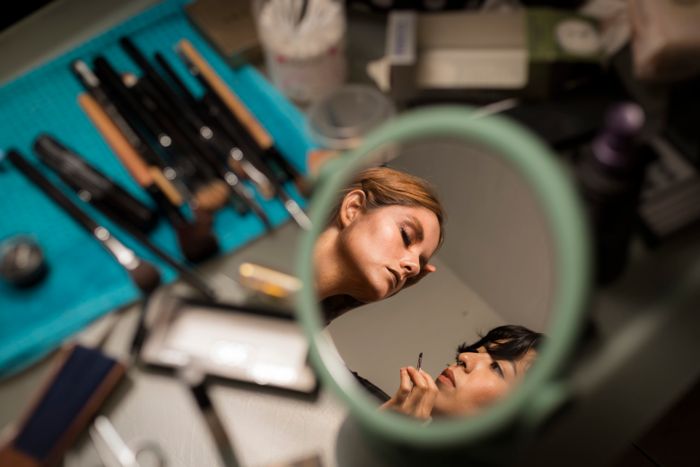
Studio one
Ten stations, ring-lit, used for the diploma's first eight weeks.
VERMILLA has taught in the same Clerkenwell building since 2011. It was set up by artists who were tired of assisting people who had paid a great deal for training that never put them in front of a live face.
Three studios over two floors, twenty-four stations in total, each with a mirror, its own power and a light that can be switched between tungsten, daylight-balanced LED and ring. A fourth room holds the kit store and the sanitising bench, which is where the hygiene module is taught.
Tutors are working artists. They teach in blocks between bookings and every practical session is staffed by a tutor and an assistant, which is what makes a cap of twelve workable. We publish term dates a year ahead precisely because tutors' diaries have to be committed that far out.
We do not name individual tutors on this site. Teams change between intakes, and a school that sells a course on one artist's name tends to disappoint when that artist is on a job.
Makeup artistry is not licensed in the United Kingdom. Our certificates are school certificates. The school is a registered company, is inspected for health and safety, and carries public liability cover for teaching. That is the full extent of it and any school claiming more is stretching.
The building has step-free access to the ground-floor studio and an accessible toilet. The two upper studios are reached by stairs only; where a student needs the ground floor, we timetable their cohort there for the whole term rather than moving them room to room.
Ten stations, ring-lit, used for the diploma's first eight weeks.
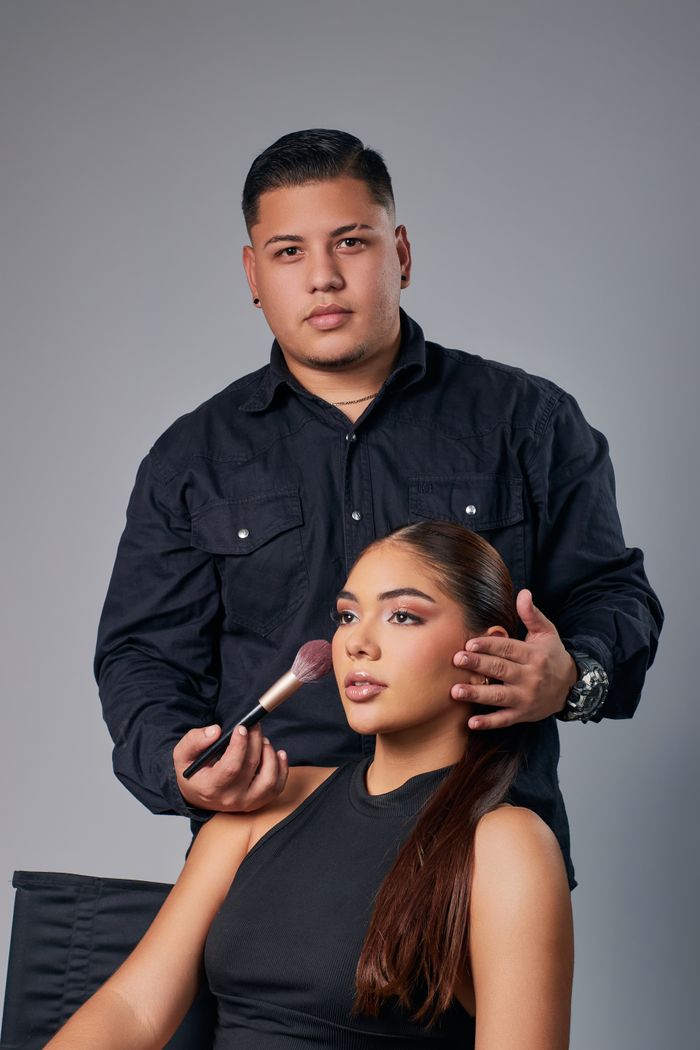
Eight stations with switchable colour temperature for camera work.
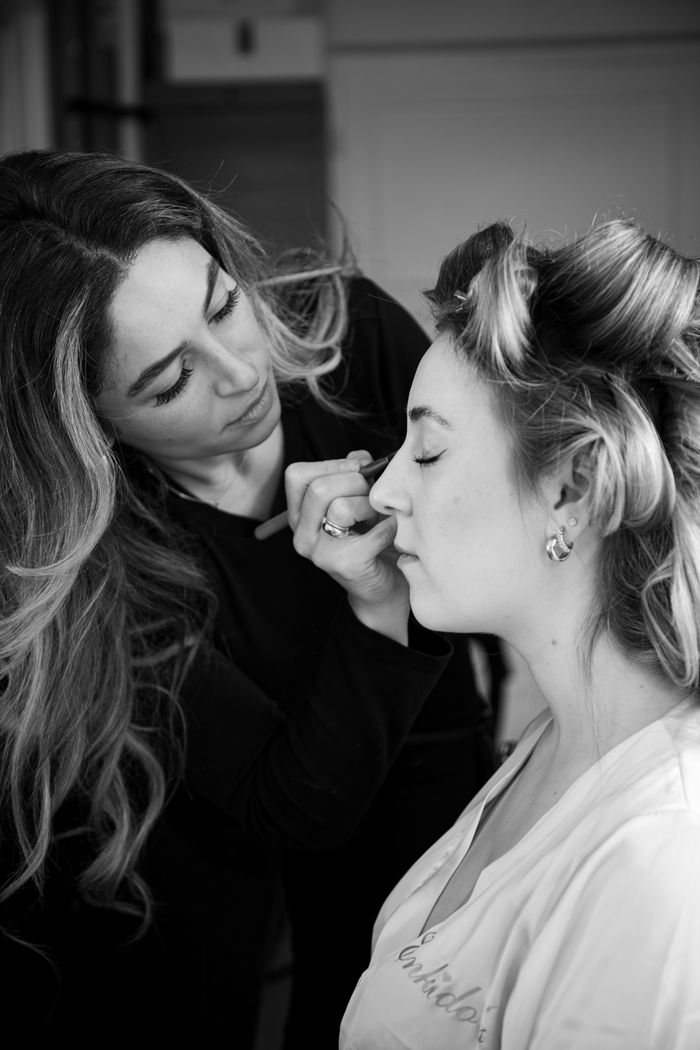
Six stations and the shoot corner used in the portfolio block.